
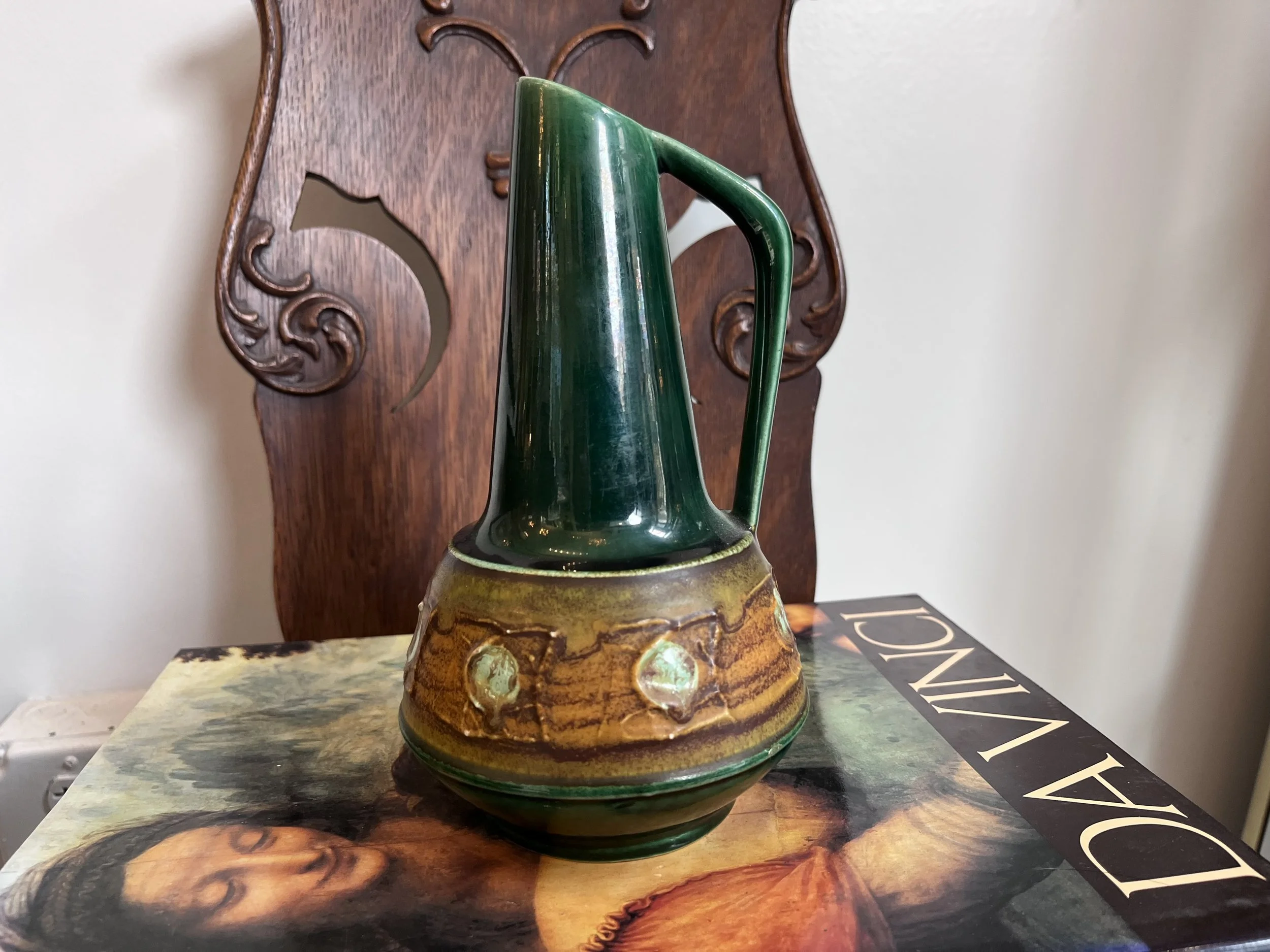
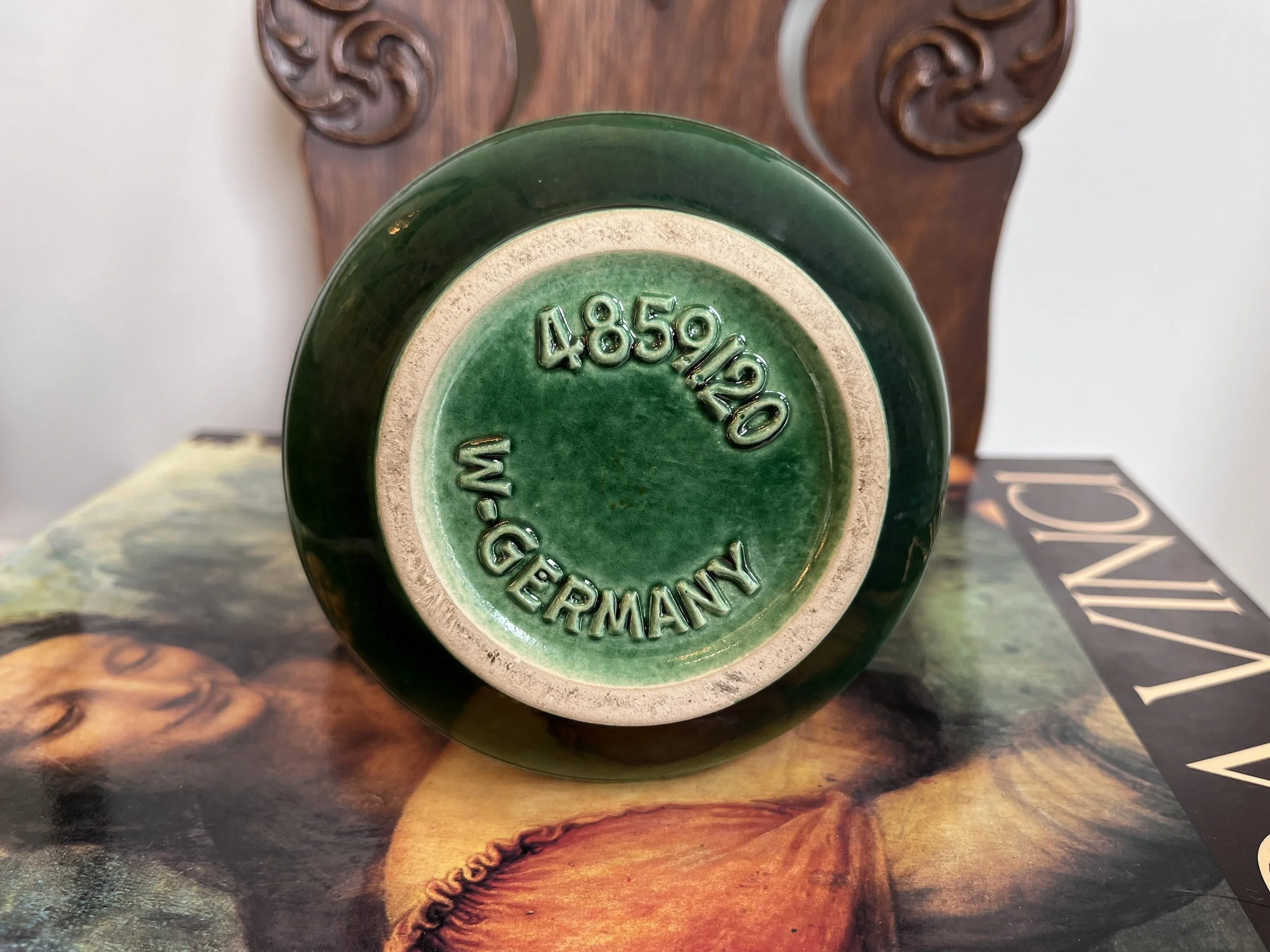
Vintage (Mid-Century) West German Ceramic Pitcher, model 4859120, with textured base and green glaze.
West German pottery, often referred to as 'Fat Lava' due to its distinctive glazes and textures, experienced a significant boom from the 1950s through the 1970s. Numerous manufacturers produced these pieces, which were characterized by vibrant colors, often with a lava-like, bubbly, or textured surface, and bold, sculptural forms. These items were popular as decorative pieces and functional tableware, reflecting the post-war optimism and modern design trends of the era. Many pieces were exported internationally, becoming sought-after collectibles today.
This particular pitcher, with its combination of a smooth, glossy green upper and a textured, earthy base with raised motifs, is a classic example of the West German pottery aesthetic. The presence of a model number, such as 4859120, is typical of the production methods employed by West German ceramic factories during the mid-20th century, aiding in identification and cataloging. Such pieces are appreciated for their unique artistic expression and as tangible links to a specific period in design history.
To inquire about pricing and availability, please email BALL HILL The Arcade at info@ballhill.com.
Vintage (Mid-Century) West German Ceramic Pitcher, model 4859120, with textured base and green glaze.
West German pottery, often referred to as 'Fat Lava' due to its distinctive glazes and textures, experienced a significant boom from the 1950s through the 1970s. Numerous manufacturers produced these pieces, which were characterized by vibrant colors, often with a lava-like, bubbly, or textured surface, and bold, sculptural forms. These items were popular as decorative pieces and functional tableware, reflecting the post-war optimism and modern design trends of the era. Many pieces were exported internationally, becoming sought-after collectibles today.
This particular pitcher, with its combination of a smooth, glossy green upper and a textured, earthy base with raised motifs, is a classic example of the West German pottery aesthetic. The presence of a model number, such as 4859120, is typical of the production methods employed by West German ceramic factories during the mid-20th century, aiding in identification and cataloging. Such pieces are appreciated for their unique artistic expression and as tangible links to a specific period in design history.
To inquire about pricing and availability, please email BALL HILL The Arcade at info@ballhill.com.